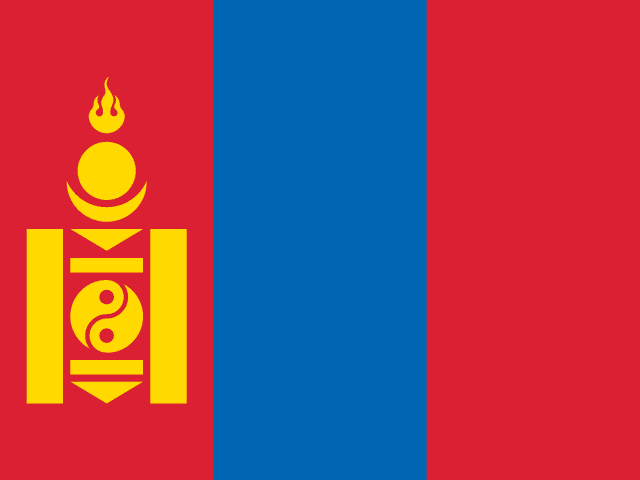
Mongolia
Mongolia
Located in Eastern Asia, Asia, Mongolia covers 1,564,110 km² and is home to roughly 3,475,540 people. Its capital is Ulan Bator.
Where is Mongolia?
Mongolia lies in Eastern Asia, Asia, and shares land borders with China, Russia. Drag or zoom the map, or open the full interactive world map.
Key facts
- Capital
- Ulan Bator
- Continent
- Asia
- Subregion
- Eastern Asia
- Population
- 3,475,540
- Land area
- 1,564,110 km²
- ISO codes
- MN / MNG
- Languages
- Mongolian
- Coastline
- Landlocked
- Currency
- Mongolian tögrög (MNT)
- Calling code
- +976
- Internet domain
- .mn
How Mongolia compares
Cut off from the sea, Mongolia sits in Asia between China and Russia. Population about 3,475,540 (0.04% of the site total); land area 1,564,110 km², for a worldwide population rank of 130th.
- Population rank
- 130th of 194
- Land-area rank
- 18th of 194
- Share of world population
- 0.04%
- Population rank in Asia
- 39th of 46
- Land-area rank in Asia
- 7th of 46
- Land borders
- 2
Countries by population · Countries by area · All landlocked countries
The flag of Mongolia, measured
Every pixel of the flag artwork was counted and grouped by shade.
- 82% of the flags of Asia contain white; this one does not.
- The closest palettes belong to Liechtenstein (differs on 13.6% of the area), Laos (17%) and Samoa (18%).
- 6 flags share exactly this set of colours, including DR Congo, Colombia and Venezuela.
Closest palettes
Ranked by how much of the flag's area would have to change colour family to match.


Did you know?
- Genghis Khan founded an empire from the steppe that eventually became the largest contiguous land empire in history.
- Naadam festival celebrates the 'three manly games' — wrestling, horse racing, and archery — on the open grasslands each summer.
- Gers (yurts) remain movable round felt homes used by herders who follow grazing livestock across vast pastures.
- Throat singing produces two pitches at once, echoing wind and animals on the empty steppe.
- The Gobi Desert holds dinosaur fossils and flaming cliffs where the first dinosaur eggs were scientifically identified.
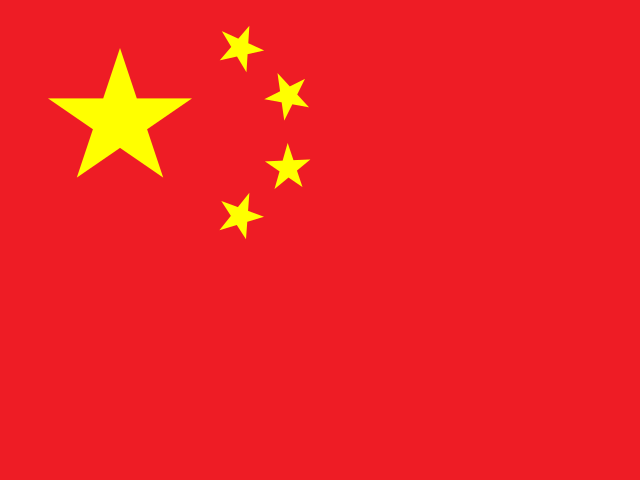 China
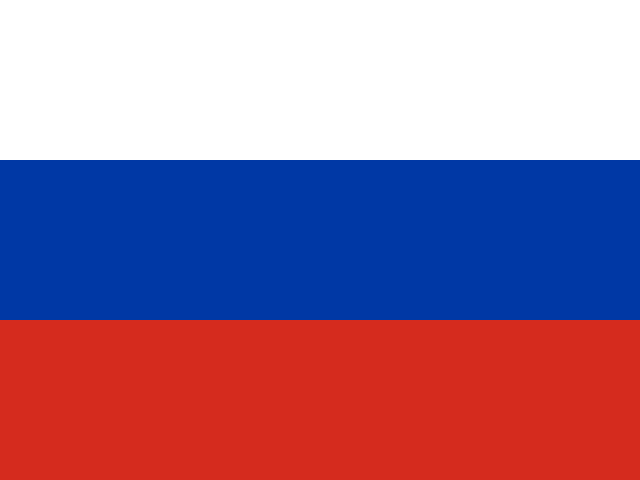 Russia