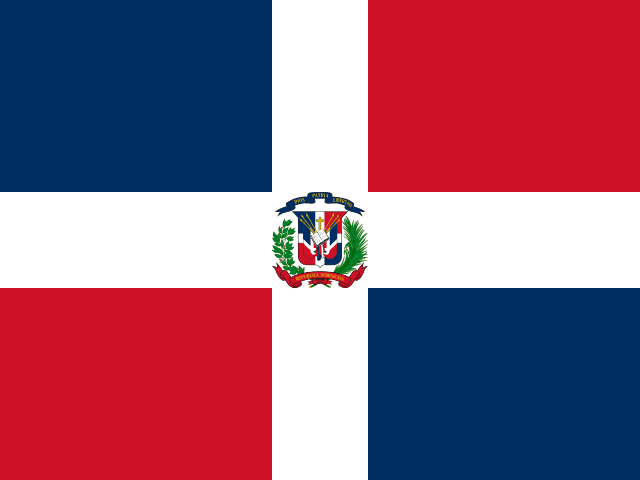
Dominican Republic
Dominican Republic
Santo Domingo is the capital of Dominican Republic, a country in Caribbean, North America, where roughly 11,427,557 people live across 48,671 km² of land.
Where is Dominican Republic?
Dominican Republic is in Caribbean, North America, bordering Haiti. Drag or zoom the map, or open the full interactive world map.
Key facts
- Capital
- Santo Domingo
- Continent
- North America
- Subregion
- Caribbean
- Population
- 11,427,557
- Land area
- 48,671 km²
- ISO codes
- DO / DOM
- Languages
- Spanish
- Coastline
- Has a coastline
- Currency
- Dominican peso (DOP)
- Calling code
- +1…
- Internet domain
- .do
How Dominican Republic compares
Relative to its size, Dominican Republic is crowded — 11,427,557 people on 48,671 km² puts population well ahead of area in the world ranking (84th vs 128th). It sits in North America, bordering only Haiti.
- Population rank
- 84th of 194
- Land-area rank
- 128th of 194
- Share of world population
- 0.1%
- Population rank in North America
- 6th of 23
- Land-area rank in North America
- 10th of 23
- Land borders
- 1
The flag of Dominican Republic, measured
Every pixel of the flag artwork was counted and grouped by shade.
- Croatia is this flag's palette twin — the two differ on just 0.7% of their area, with Slovenia close behind at 1%.
- The blue here (#002D62) is the darkest found on any of the 95 flags where blue covers at least 5% of the area.
- Its red measures #CE1126, a shade that appears unchanged on 16 other flags, among them Egypt, Philippines and Iraq.
Closest palettes
Ranked by how much of the flag's area would have to change colour family to match.


Did you know?
- Santo Domingo's Zona Colonial holds the first cathedral, university, and hospital in the Americas.
- Merengue and bachata — born here — drive dance floors from barrios to global charts.
- Larimar, a rare blue stone, is found only in the Dominican Republic's southwest mountains.
- Baseball is a national obsession, producing a steady stream of Major League stars.
- Humpback whales gather off Samaná Bay each winter to breed in warm Caribbean waters.
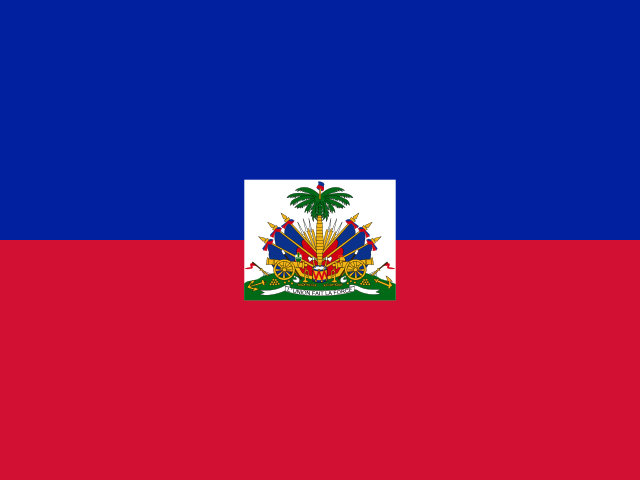 Haiti