Malta
Republic of Malta
Located in Southern Europe, Europe, Malta covers 316 km² and is home to roughly 539,607 people. Its capital is Valletta.
Key facts
- Capital
- Valletta
- Continent
- Europe
- Subregion
- Southern Europe
- Population
- 539,607
- Land area
- 316 km²
- ISO codes
- MT / MLT
- Languages
- English, Maltese
- Coastline
- Has a coastline
- Currency
- Euro (EUR)
- Calling code
- +356
- Internet domain
- .mt
How Malta compares
Malta is an island country in Europe: about 539,607 people on 316 km², with no land border. By population it ranks 39th of 45 in Europe and 165th in the world set used here.
- Population rank
- 165th of 194
- Land-area rank
- 185th of 194
- Share of world population
- under 0.01%
- Population rank in Europe
- 39th of 45
- Land-area rank in Europe
- 41st of 45
- Land borders
- 0
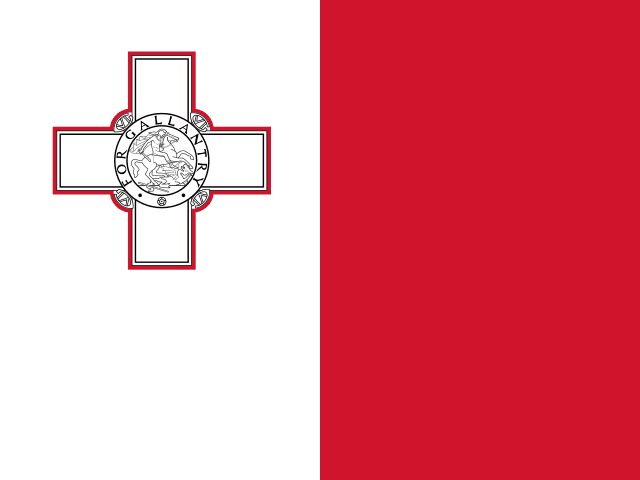
The flag of Malta, measured
Every pixel of the flag artwork was counted and grouped by shade.
- Red and white is one of the three most common combinations, found on 18 flags including Indonesia, Japan and Türkiye.
- White covers 46.8% of this flag; across the 45 flags of Europe, the average is 23.9%.
- By colour proportions, Indonesia comes nearest — it differs on 2.5% of the area — followed by Poland and Monaco.
Closest palettes
Ranked by how much of the flag's area would have to change colour family to match.


Did you know?
- Malta's megalithic temples, built around 3600 BCE, are older than Egypt's pyramids.
- The Knights of St. John fortified the islands and built the grand harbor city of Valletta.
- Maltese is a Semitic language written in Latin script — a linguistic rarity in Europe.
- During World War II Malta endured relentless bombing and was awarded the George Cross for bravery.
- Village festas with fireworks, brass bands, and saint processions light up summer weekends.